


The sticky duct tape has officially been ripped away from Providence’s corporate PR campaign.
📌 The 3-Minute Briefing: Key Takeaways from Tuesday’s Meeting
- The Ambulance Bombshell: Providence leadership confirmed that under their proposed model, the new health center will NOT accept 911 ambulance traffic. All incoming ambulances will completely bypass the Laguna Beach coast.
- “Stabilize and Transfer” Protocol: Walk-in patients with major life-threatening emergencies (like a heart attack or stroke) will only be temporarily stabilized by an on-site care team before being forced into a secondary ambulance transport inland to Mission Viejo.
- The Funding Disparity: While stripping critical acute care and ER infrastructure from our geographically isolated 22-acre coastal campus, Providence showcased where their money is actually going: a $712 million centralization expansion of their Mission Viejo inland mega-campus.
- The City’s Leverage: The 22-acre hospital site is strictly zoned as an Institutional parcel. Council Member Alex Rounaghi confirmed that while a historic title restriction was quietly removed years ago, the City Council intends to use its strict municipal land-use and zoning powers as absolute leverage to fight the closure.
- What’s Next: The City Council is officially appointing the members of its specialized Hospital Task Force on Tuesday, June 23rd to launch a data-driven, independent safety impact analysis.
At the June 9th Laguna Beach City Council meeting, Providence Chief Executive Seth Teigen took the podium for a highly anticipated “Receive and File” informational presentation on Item 17 regarding the future of the Mission Hospital Laguna Beach campus [01:36:17, 01:36:26]. While the presentation relied heavily on polished corporate catchphrases like “modernized care centers,” “future-focused delivery models,” and “reimagining healthcare,” the sharp cross-examination by Council members and emotional public testimony exposed an alarming baseline operational reality:
Removal of Ambulances
The proposed facility will completely eliminate 911 ambulance-receiving emergency care on the Laguna coast [01:41:53, 02:01:41].

The strategic timeline introduced by Providence at City Hall, highlighting the multi-year "Study, Listen, Decide" campaign designed to gather coastal healthcare feedback.1. The Core Admission: The Restrictive “Stabilize and Transfer” Bypass
The single most critical operational change revealed during the session centers on emergency transit routing [01:41:53]. Under cross-examination regarding how critical emergencies will be managed, Providence leadership verified that the planned ambulatory care campus will not possess the regulatory capability or infrastructure to accept 911 ambulance traffic [01:41:53, 01:46:54].
Instead, local healthcare emergency routing will shift to a multi-tiered “Stabilize and Transfer” framework [01:46:54, 01:56:34]:
- Total 911 Ambulance Bypass: Incoming 911 emergency medical services (EMS) routing for major life-threatening conditions—including stroke, trauma, acute cardiac arrest, or severe pediatric emergencies—will completely bypass the Laguna Beach campus [01:44:06, 01:46:54].
- The Walk-In Restriction: The on-site emergency medicine physicians and care teams will only accept low-acuity, walk-in patients who arrive via private transport [01:40:51, 01:46:54].
- Secondary Inter-Facility Transport: If a high-acuity patient (such as an individual experiencing active cardiac symptoms or a stroke) walks through the front door, the local medical team will administer secondary stabilizing treatment, activate a separate 911 call from the facility, load the patient into an ambulance, and transport them inland [01:56:02, 01:56:34].
- Inland Mandatory Diversion: These critical patients will then face mandatory transit up the canyon or along Pacific Coast Highway (PCH) to the primary Mission Hospital Mission Viejo campus [01:56:02, 02:01:41].
2. Inside the Numbers: The “40 Out of 50” Statistical Fallacy
To justify dismantling 911-receiving infrastructure, Providence presented data points regarding current emergency room usage patterns [01:40:46].
Executive leadership testified that the current Laguna Beach emergency department treats an average of roughly 48 to 50 patients per day [01:40:46]. Providence noted that 40 out of those 50 daily patients are self-transporting “walk-ins” who drive themselves to the facility due to ease of parking and fast navigation [01:40:51, 01:41:05]. Only an average of 10 patients per day arrive via ambulance, with 6 originating directly from within the City of Laguna Beach boundaries [01:41:28, 01:41:32].
However, community advocacy groups and local healthcare experts quickly pointed out the underlying structural flaw in this metric during public comment [02:03:53, 02:28:35]:
The 10 patients arriving via ambulance represent the highest-acuity cases—the literal life-or-death situations where minutes dictate permanent neurological damage or survival boundaries [02:04:38, 02:05:08]. Erasing the safety net for those 10 critical individuals per day cannot be mathematically neutralized by the convenience factors cited for the 40 walk-in patients [02:06:20].
3. The Capital Concentration: A $712 Million Inland Mega-Campus
While Providence’s presentation framed the reduction of acute beds and emergency infrastructure on the coast as a “reimagining” of local care, it simultaneously showcased exactly where community healthcare capital is being redirected [01:50:25].
Providence highlighted its current $712 million multi-phase centralization expansion at the Mission Viejo campus [01:50:25]. This extensive inland project features:
- A state-of-the-art, multi-story acute care medical tower.
- Significantly expanded Intensive Care Units (ICUs).
- A centralized, high-volume cardiac, stroke, and neurological receiving center [01:45:11].
- The addition of 15 new observation beds and 8 dedicated fast-track emergency department beds [01:50:43].
This layout makes the corporate strategy entirely transparent: Providence is systematically concentrating its high-revenue, specialized clinical assets into a massive centralized inland footprint while winding down full-scale acute and emergency access for geographically isolated coastal populations [02:17:22, 02:21:44].
4. Sharp Cross-Examination: Council Questions Legal and Land-Use Leverage
Because tonight’s item was strictly an informational “Receive and File” staff report submitted by City Manager Dave Kiff, the City Council lacked the immediate procedural mechanism to take formal legislative action or block the transition tonight [01:36:17, 02:38:02]. However, Council members pushed back aggressively during the Q&A session:
- The 88% Stronghold: Council Member Bob Whan formally confronted Providence leadership with the city’s recent independent community survey data [01:52:33]. “We never get 88% on anything around here,” Whan observed, emphasizing that an overwhelming 88% of local respondents stated that maintaining a fully operational emergency room in Laguna Beach is an absolute priority [01:52:44, 01:52:51].
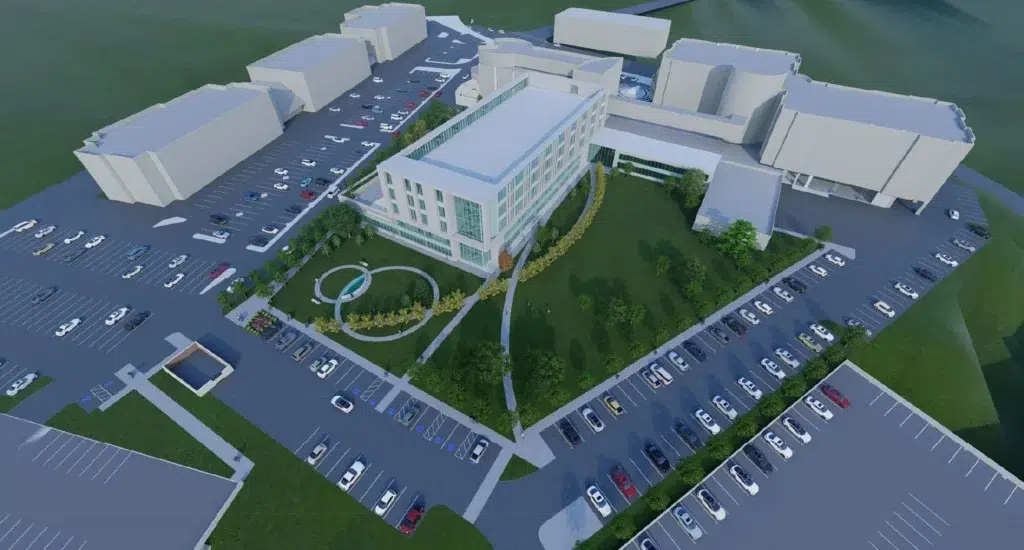
- The Land-Use Hammer: Council Member Alex Rounaghi shifted the focus to the city’s core enforcement mechanisms [02:34:43]. Renagi revealed that a thorough review of the property’s historic title records confirmed that a previous covenant from the James Irvine Foundation—which legally mandated the operational continuance of a hospital on the site—had been quietly removed years ago [02:34:53, 02:35:06]. Consequently, Renagi declared that the city’s primary point of leverage is now its unyielding municipal zoning and land-use powers [02:35:12].The 22-acre ocean-view campus is strictly zoned as an Institutional parcel [02:27:00]. Renagi signaling that the city will use this land-use footprint as both a “carrot and a stick” to ensure corporate accountability [02:35:17].
- The Formal Impact Task Force: The Council confirmed that formatting and interviews for the city’s specialized Hospital Task Force are actively underway, with official member appointments scheduled for the June 23rd voting session [02:33:17, 02:33:24]. This independent body will lead a data-driven impact analysis of the region’s emergency infrastructure [02:33:31].

5. Neighborhood Voice: Public Testimony Rejects the Urgent Care Model
The public comment period saw a continuous stream of residents, local emergency room nurses, and long-time neighborhood advocates step to the microphone to challenge the presentation [02:02:14]:
- The Summer Traffic Gridlock: Long-time residents detailed the geographic vulnerability of the coast, noting that during peak summer weekends, travel times up the canyon or along PCH to Newport Beach or Mission Viejo regularly stretch well past 45 minutes to an hour [02:02:22, 02:05:36]. “If we lose the emergency room, especially during summer months and weekends, we are going to lose people’s lives,” testified resident Ron Gisman, who recounted how local paramedics saved his life during a recent sudden cardiac event [02:08:01, 02:08:09].
- The Clinical Reality of Stroke Care: A local registered nurse who previously worked inside both the Mission Viejo and San Clemente emergency departments directly challenged Providence’s wait-time assertions [02:03:24, 02:03:47]. She stated that wait times in the centralized Mission Viejo ER waiting room frequently exceed five to six hours for non-trauma cases [02:04:09]. Furthermore, she emphasized the rigid clinical timeline required for administering life-saving thrombolytic therapies (like tPA) for stroke victims [02:05:08]. Forcing stroke patients into a secondary transport model introduces dangerous delays that guarantee permanent, irreversible neurological damage [02:05:20].
- Systematic Service Degradation: Neighborhood advocates noted that this step is merely the final phase of a multi-year corporate strategy [02:17:22]. Over the past decade, Providence has systematically stripped individual services from the Laguna Beach campus—first closing the maternity ward, then limiting outpatient lab draws, and encouraging localized physician groups to migrate their offices inland [02:17:29, 02:18:07]. This systematic degradation was purposefully leveraged to manufacture the lower bed-census counts presented by executives tonight [02:17:53, 02:18:15].
6. Community Action Plan: How to Use Their FAQ Portal
Providence concluded their remarks by highlighting their newly deployed public relations clearinghouse website: lagunabeachcarefuture.org, which includes a form for public question submissions [02:37:06, 02:37:43].
Our neighborhood association is advising every resident to take them up on this offer immediately. Do not submit generic complaints. We need to flood their portal with highly specific, technically rigorous questions that force corporate counsel to answer for tonight’s testimony.
Copy, paste, and submit these three explicit operational questions into their form:
- Given that the proposed facility will completely eliminate 911 ambulance-receiving status, what is the exact projected mathematical increase in transport times for a South Laguna resident experiencing a critical STEMI (heart attack) during peak July/August coastal gridlock?
- Why is capital being prioritized for a $712 million centralization expansion in Mission Viejo while systematically dismantling acute care emergency security for a geographically isolated coastal community?
- What are the exact regulatory parameters and licenses that Providence intends to file with the California Department of Public Health (CDPH) to transition this campus out of acute care status, and what is the precise date those filings will occur?

Verified FAQ: What You Need to Know After the Council Session
Does the proposed health center accept standard 911 ambulance traffic?
What is the “Stabilize and Transfer” protocol?
If a patient experiencing an emergency walks into the new facility via private vehicle, the localized care team will attempt to provide initial stabilizing treatment [01:46:54, 01:56:34]. The facility must then execute a secondary transfer via ambulance to transport that patient over the canyon to the acute care center in Mission Viejo [01:56:02, 02:01:41].
Can the City Council block the closure of the hospital and ER?
While the city does not own the land, the City Council maintains absolute authority over municipal zoning and land-use powers [02:34:43, 02:35:12]. The 22-acre site is strictly zoned for institutional healthcare use [02:27:00]. The council can refuse any zoning modifications or redevelopment applications, using its land-use power as a significant tool to force Providence to maintain emergency access [02:35:17].
What are the next formal steps in the city’s opposition plan?
The city is formally appointing the members of its specialized Hospital Task Force on June 23, 2026 [02:33:17, 02:33:24]. This independent panel will run an objective third-party evaluation of the health, safety, and logistical impacts that erasing the ER will bring to coastal South Orange County [02:33:31, 02:35:31].
City Council Regular Meeting – June 9, 2026 City of Laguna Beach · 290 views


